
Moisture meter vs oven drying
This is not really a competition. Oven drying is the reference method and should stay the reference method. The question is what you use to run the plant between reference tests.
What oven drying gives you
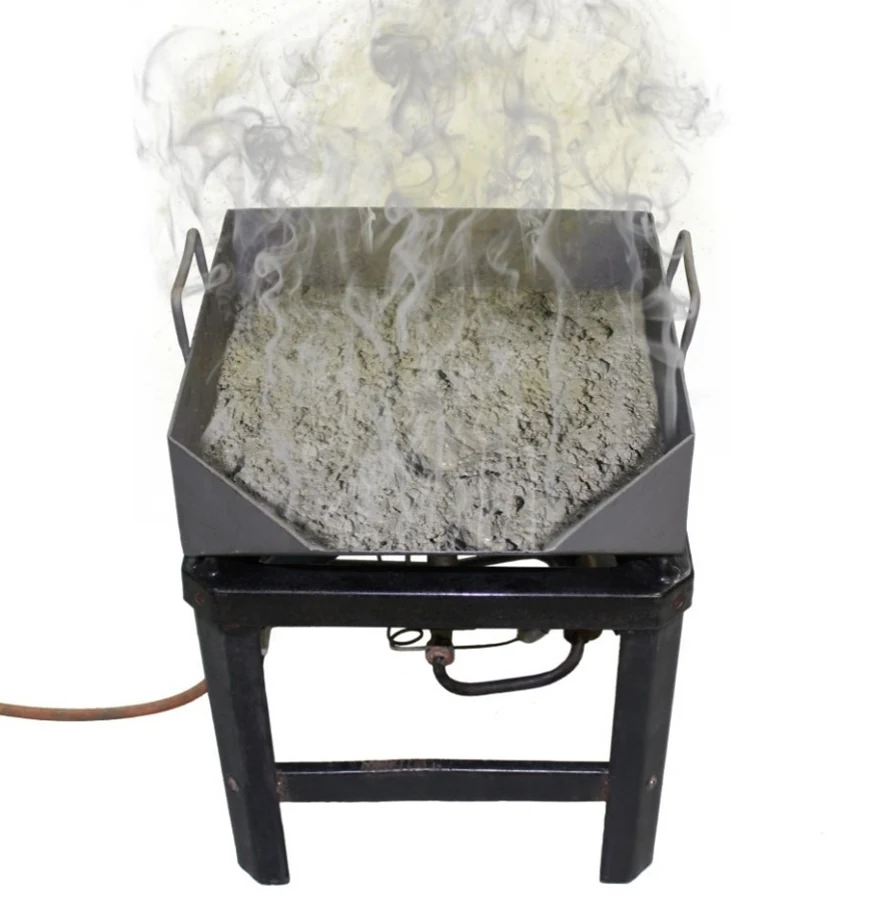
ASTM C566 determines total evaporable moisture by drying a sample to constant mass. Weigh wet, dry, weigh dry, and the water lost as a percentage of dry mass is your moisture content.
It is accurate, it is defensible, and it is what a QC record is built on. It is also destructive, needs a balance and a drying oven, and takes long enough that the material it describes has already been batched, mixed and probably delivered.
What an instrument gives you
A portable TDR meter reads through a volume of material and returns gravimetric moisture in about two seconds, at the pile, without sample prep. The material is not destroyed and nothing goes to a lab.
That does not make it a substitute for the standard. It makes it possible to know the number while you can still act on it — before the aggregate is weighed, before water is added, before the truck leaves.
The sensible arrangement is both: the instrument runs production, and periodic oven tests verify the instrument and anchor the QC record.
What an unmeasured 1% costs you
Take 1,800 lb of sand per cubic yard at an assumed 4% moisture, when the stockpile is actually running 5%.
That one point of unmeasured moisture is roughly 17 lb of extra water per cubic yard entering the mix uncounted — about two gallons. On a 10-yard load that is 20 gallons of water you did not intend to add, moving the water-to-cement ratio against your mix design in the direction that costs strength.
Sand moisture moving a full point between morning and afternoon, or between one end of a stockpile and the other, is not unusual. That is the case for measuring rather than assuming.
Moisture meter vs oven drying — frequently asked
What is ASTM C566?
ASTM C566 is the standard test method for total evaporable moisture content of aggregate by drying. A sample is weighed wet, dried to constant mass, and weighed again. Moisture is the mass of water lost expressed as a percentage of the dry mass.
Does a moisture meter replace ASTM C566?
No. Oven drying remains the reference method, and it is what you calibrate against and what you cite in a QC record. An instrument gives you a reading in seconds so you can correct the batch you are about to make, rather than documenting the one you already made.
How do I calibrate a moisture meter against oven drying?
Take a sample at the same point and time as the instrument reading, run it through the oven method, and compare. Repeat across the moisture range you actually see. If the offset is consistent, the material needs its own calibration — SONO probes ship with 15 factory calibrations and custom materials can be added.
Why does moisture content matter in concrete batching?
Free water on the aggregate is part of your mix water whether you account for it or not. Sand typically runs 2 to 6 percent moisture and moves the most. If the batching system works from an assumed value, the actual water-to-cement ratio drifts away from the mix design, which affects strength, slump and yield.
Still running oven tests to control production?
Most plants keep the oven for verification and move day-to-day control onto an instrument. Tell us your current QC routine and we will show you where the meter fits into it.
Houston, Texas · Most quotes answered within one business day