
SONO VARIO Standard Online Sand Moisture Sensor
Fixed inline probe for sand and gravel in normally abrasive service. Continuous moisture to the PLC.
- Measuring conductor sits between two ceramic plates in direct contact with the material
- No measurement through a ceramic cover — full sensitivity at the surface
- Measuring geometry does not change over time
- Insensitive to variations in the grading curve
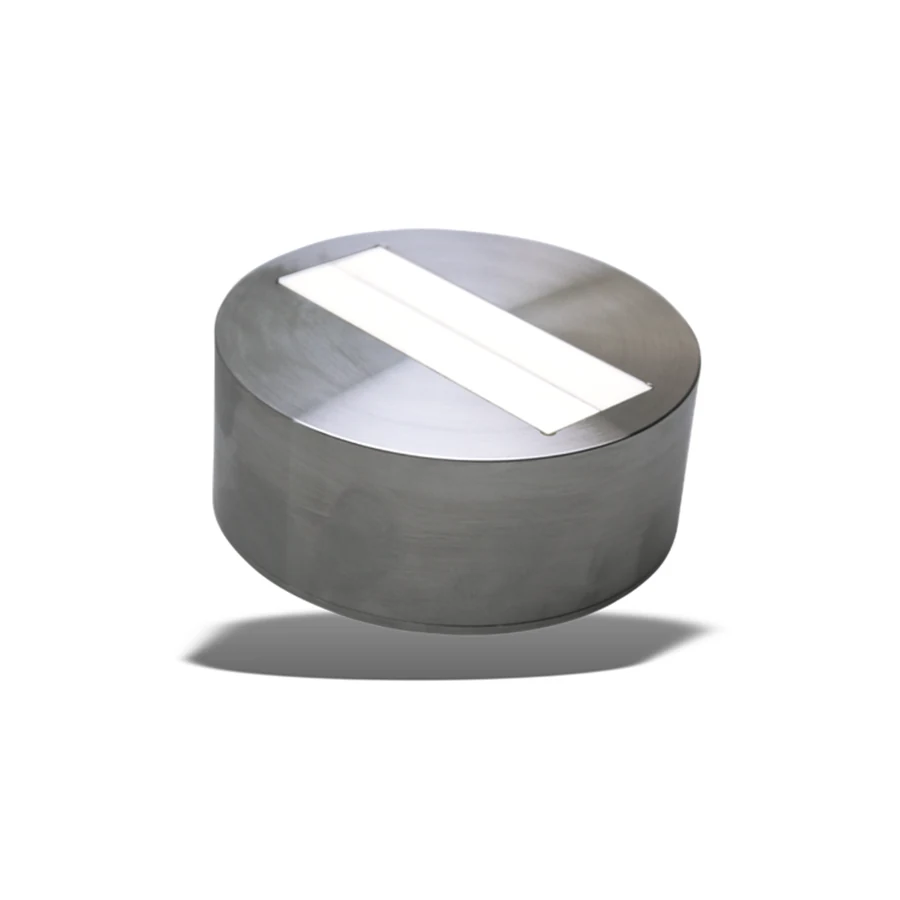
The default inline probe
SONO VARIO Standard is the round sensor for normally abrasive service — sand and gravel up to 8 mm grain size — with a stainless steel probe head and a rectangular ceramic window.
It is the sensor most ready-mix plants start with, because most ready-mix plants correct water on sand, and sand is what this probe is built for.
The head design, and why it matters
The measuring conductor sits between two ceramic plates and is in direct contact with the material being measured. Nothing is measured through the ceramic cover. That direct contact is what gives the probe its maximum sensitivity.
It also means the measuring geometry does not change over time. Combined with a measuring distance that is unchanged by abrasion on the probe surface, the result is a sensor whose readings do not drift as it wears — and which does not need recalibrating when it does.
The measurement is additionally specified as not sensitive to variations in the grading curve. That matters more than it sounds: a change of sand supplier, or a stockpile that has segregated, is the usual reason an inline moisture reading quietly stops being right.
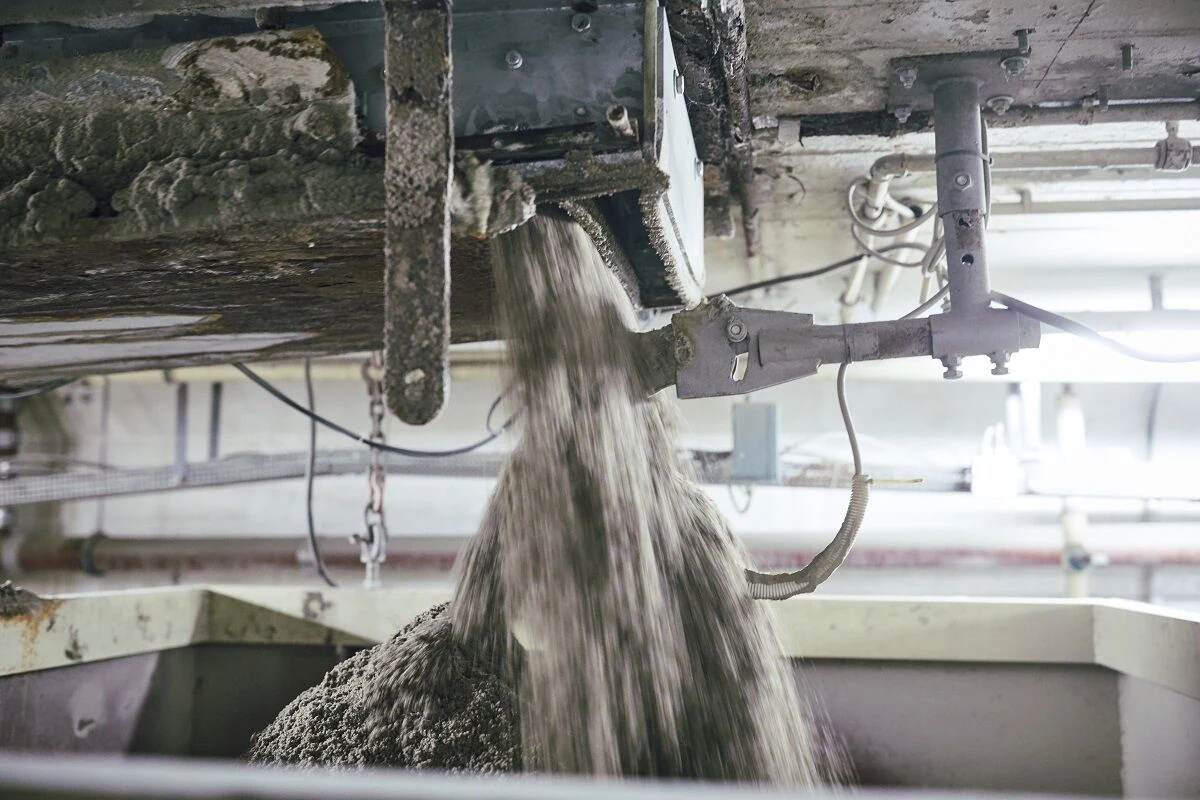
Fitting it to your plant
Round-body sensors mount under the silo flap, on the dosing belt, at conveyor discharge, or in a hopper for non-adhesive material. Where a round body will not fit — typically a silo or bin wall — SONO SILO Standard is the same measurement in a rod form factor.
Where material is coarser than 8 mm or genuinely abrasive, step up to the Xtrem head. That is a wear decision, not an accuracy one.
How the SONO VARIO Standard connects to your plant
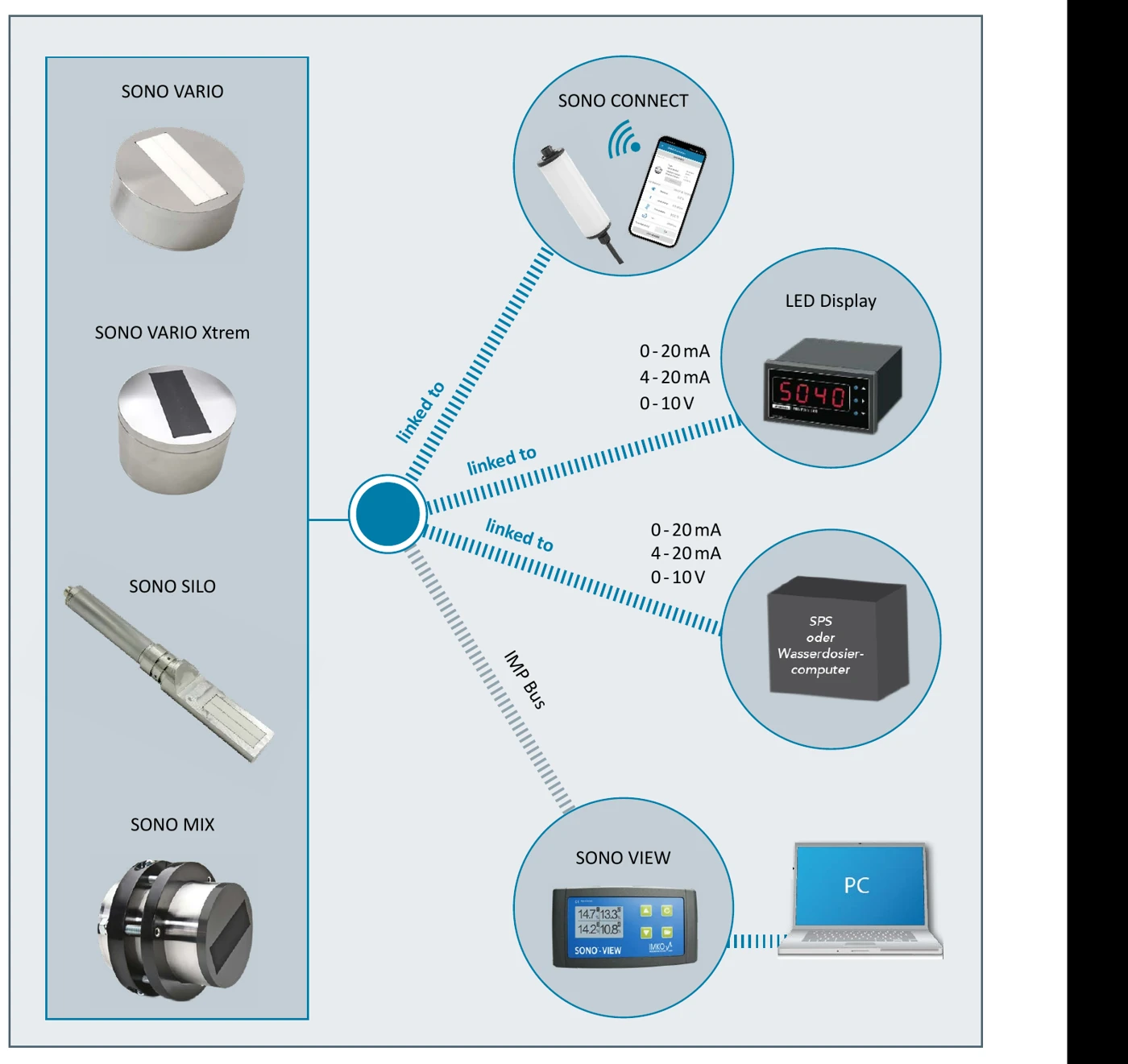
SONO probes connect to the PLC through an analog interface at 0–20 mA, 4–20 mA or 0–10 V, as with any other moisture probe. Fifteen typical product calibrations — aggregates, sand, gravel, crushed stones — ship as standard.
For parameterization and initial commissioning, SONO VIEW gives you a wired display for up to 16 probes, or the probe can be configured wirelessly. Either route can select, change or create calibrations and display the probe's measurements directly. Over long cable runs the IMP bus is the robust option and requires a display unit; a serial connection over RS 485 is also feasible.
SONO VARIO Standard technical data
Materials: Sand, gravel up to 8 mm grain size
| Measurement technology | TRIME TDR |
|---|---|
| Max grain size | 8 mm |
| Probe head | Stainless steel, rectangular ceramic window |
| Analog output | 0–20 mA, 4–20 mA or 0–10 V |
| Digital output | RS 485, IMP bus |
| Factory calibrations | 15 material types |
SONO VARIO Standard — frequently asked
What is the maximum grain size?
8 mm for the Standard head. The manufacturer specifies SONO VARIO Standard for normally abrasive sand and gravel up to 8 mm grain size. For coarse gravel and crushed stone up to 32 mm, use SONO VARIO Xtrem.
How does it connect to a batch controller?
Analog output at 0–20 mA, 4–20 mA or 0–10 V, or digital over RS 485 or the IMP bus. Electrical integration is identical to other measuring systems and power comes from system voltage.
Does it need recalibrating as it wears?
No. The measuring distance is unchanged by abrasion on the probe surface, so measurement quality and accuracy are not affected by wear.
Confirm the SONO VARIO Standard fits your material
Send your material, particle size and installation point. We will confirm the probe, the calibration and the output configuration before you order.
Houston, Texas · Most quotes answered within one business day